

There’s a moment in almost every great K-drama when the music hits before the tears do. A soft piano chord. A voice that trembles on a single note. Maybe it’s raining, maybe someone is walking away — and suddenly, your heart knows what’s happening long before the dialogue confirms it.
That’s the invisible magic of K-dramas: they don’t just tell stories through characters, they compose them.
When a Song Becomes a Memory
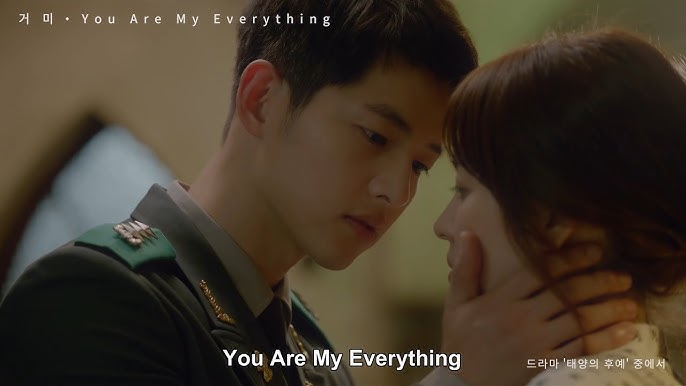
Ask any long-time fan and they’ll tell you — K-drama soundtracks aren’t background noise. They’re emotional bookmarks. You can hear the first few seconds of Ailee’s “I Will Go to You Like the First Snow” (Goblin) or Gummy’s “You Are My Everything” (Descendants of the Sun) and instantly be transported back to a scene, a feeling, maybe even a version of yourself that existed when you first watched it.
Music turns the viewing experience into muscle memory. You may forget plot details, but the sound remains. It’s almost Pavlovian — your heart starts to ache before you even realize why.
The Art of Sonic Storytelling
Korean dramas have mastered the use of music as emotional architecture. Instead of filling every silence, they frame it. When a character walks home alone, it’s not silence that fills the air — it’s a melody that breathes for them.
In Crash Landing on You, the recurring piano themes mirror the main characters’ longing, but also their restraint. The music doesn’t tell you what to feel — it gives you permission to feel.
Sometimes, the best lines in a K-drama aren’t spoken at all. They’re sung.
Music as Emotional Bridge
What’s fascinating is how universally the soundtracks connect with audiences who may not even speak Korean. Lyrics often become secondary; tone takes over. A soaring chorus, a delicate guitar riff, or a whisper-soft ballad communicates emotion across language barriers.
That’s part of why watching on global platforms like Drama Cool feels so immersive — you’re not just reading subtitles, you’re feeling the rhythm of emotion itself. You can sit halfway across the world, and still know exactly what that song means, even if you can’t translate a single line.
It’s not about understanding the words — it’s about recognizing the ache.
When Silence Is the Loudest Sound
Not every K-drama moment needs a score. Some of the most powerful scenes are the ones that let silence breathe. After a breakup. After a revelation. After someone finally says the truth.
In My Liberation Notes, silence becomes its own kind of music — heavy, honest, and patient. The absence of sound lets us hear everything else: the tension in a breath, the click of a glass, the sound of life continuing.
The balance between music and silence is where the genre’s emotional precision lies. It’s not manipulation; it’s resonance.
The Global Soundtrack Effect
K-drama OSTs have now become an entire industry of their own — charting on Spotify, trending on TikTok, and even finding their way into Western playlists. It’s a testament to how emotional storytelling transcends language.
You might not know the backstory, but when you hear a K-drama ballad late at night, it feels like a message written just for you. These songs become part of the global emotional archive — shared feelings from Seoul to San Francisco.
And yes, maybe that’s why we keep hitting replay even after the show ends. Because what the story started, the music continues.
A Quiet Confession
Here’s a small confession: sometimes I rewatch certain scenes on Drama Cool just to listen. Not for the actors, not for the dialogue, but for that one haunting track that still lingers in my mind.
It’s a strange kind of comfort — revisiting sadness, but safely, through melody. It’s like keeping an old photograph of a moment that once broke your heart but now makes you smile.
That’s the essence of the K-drama soundtrack: it doesn’t erase pain. It teaches you how to live with it.
Final Note
Every story needs words, but not every feeling does. The best K-dramas understand that music fills the spaces language can’t reach. It tells us when to hold on, when to let go, and when to simply sit still and feel everything at once.
So next time the music swells during a scene, don’t skip it. Let it play. Let it say what you can’t.
Because sometimes, the soundtrack is the story.
